
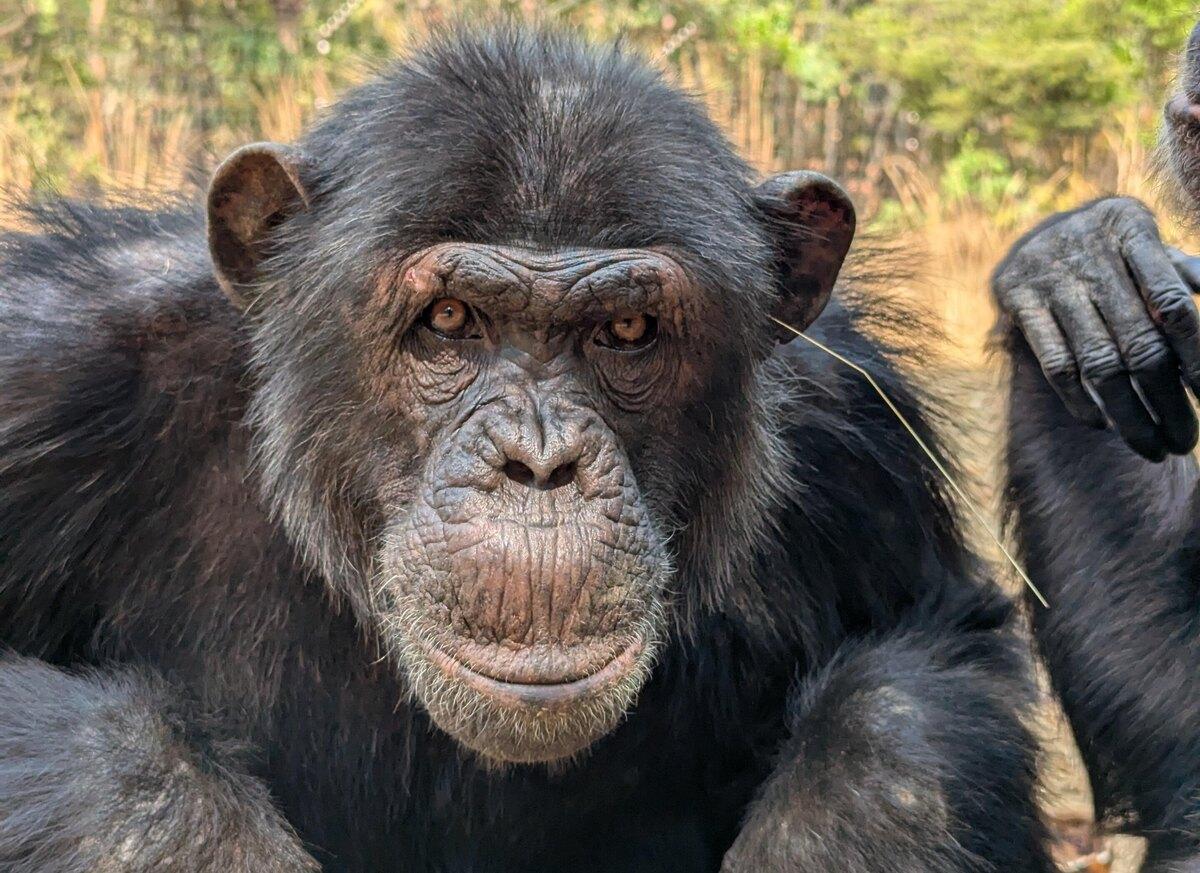
During 2010, primatologists noticed a strange habit of a female chimpanzee from Chimfunshi Wildlife Orphanage Trust in northern Zambia. For no apparent reason, she began inserting a blade of grass into her ear.
Seven other primates adopted her habit. Despite the fact that the “trendsetter” died, other female primates still occasionally wear a blade of grass in their ears.
More than a decade later, chimpanzees from another group in the same reserve also began inserting blades of grass in their ears. Primatologists stressed that they had no contact with the previous group, so they could not copy their behavior.
In the journal Behaviour, biologists said that studying this habit, the chimpanzees were checked for itching in their ears. No signs of abnormalities were found by the scientists.
As a result, scientists came to the conclusion that the strange ritual primates have adopted from humans.
It turned out that the employees of the reserve, looking after both groups of monkeys, from time to time stuck in their ears blades of grass or matches to clean them. The caretakers in the other groups did not do this.
Later, the chimpanzees began to copy each other's behavior, and then the monkeys in one group discovered that a blade of grass could be stuck not only in their ears, but also in another hole.